
Settled ground
Moores Mill sits in the established belt just north of Huntsville — close enough that it is one of our quicker non-city runs, settled enough that the housing stock has real age on it.
That age defines the work. In a new subdivision we are mostly rekeying and reinforcing. Here we are mostly repairing things that have been working for thirty or forty years and have finally started to complain.
The worn key problem
This is the signature Moores Mill call and it is worth explaining properly, because most people diagnose it backwards.
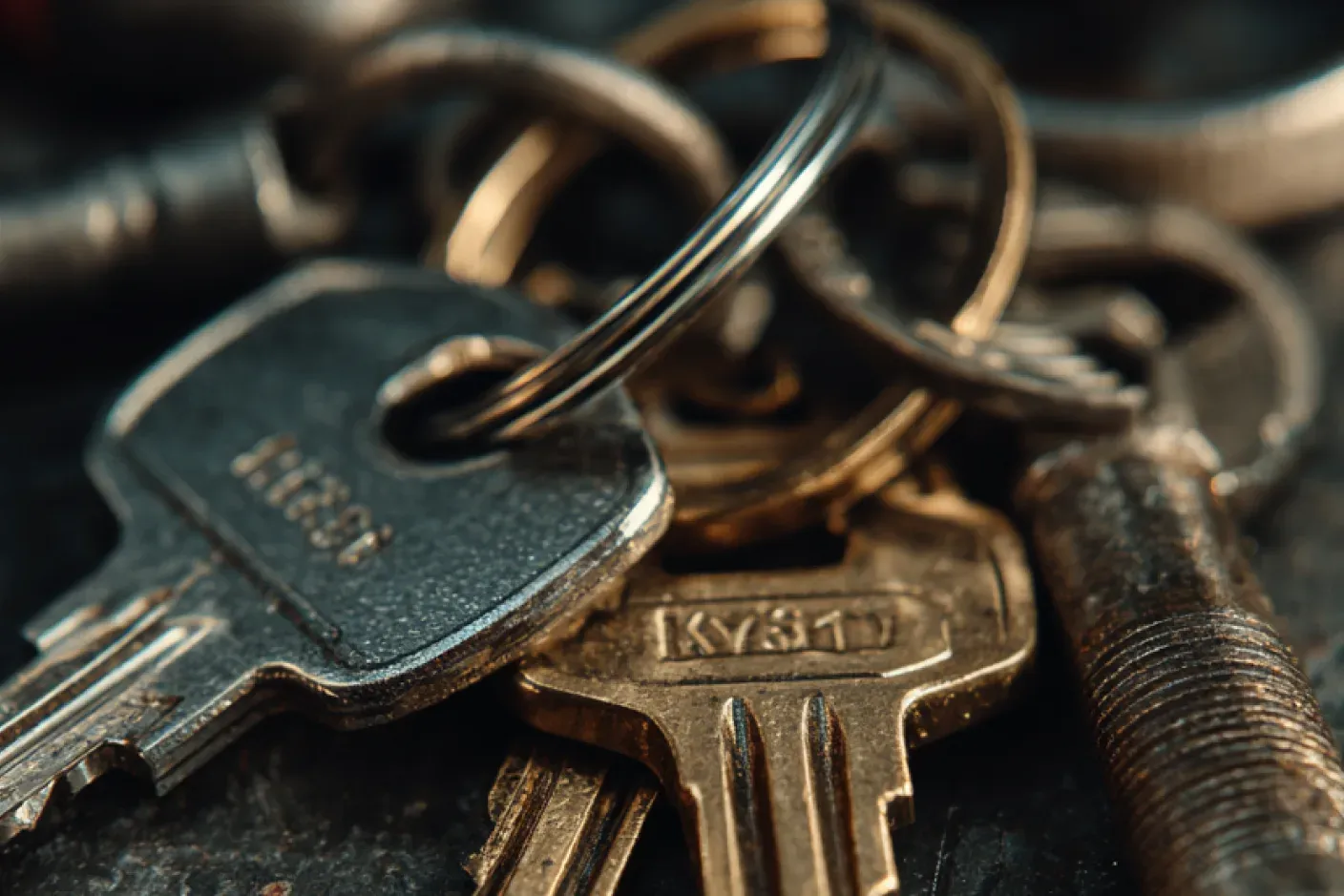
A key is a set of depths cut to a few thousandths of an inch. Every single use drags those peaks across the pins in your lock, and over fifteen or twenty years they wear down measurably. The key gets slightly shorter at every high point, and eventually it stops lifting the pins to exactly the right height.
The symptoms arrive gradually. First it needs a small jiggle. Then you have to pull the door toward you. Then it only works if you hold it a certain way. Then one cold morning it does not work at all — and cold matters, because metal contracts and the tolerance you were living on disappears.
Almost everybody assumes the lock is failing. The tell is simple: is there another copy that gets used less, and does that one still work fine? If so, the lock is healthy and the key is finished.
The fix is not to copy the worn key — that just reproduces the wear. We cut a fresh key to the lock’s actual code, and the door works like it did in 2005.
Long-held houses changing hands
Moores Mill has a lot of homes that have been in one family for decades, and when those change hands we get a particular kind of call.
There is no way to reconstruct the key history. Forty years of neighbors who watered plants, relatives with a spare, contractors, house-sitters, a set that went to a son who moved to Georgia in 1998. Often the people who would have known are no longer around to ask.
Rekeying every exterior lock is the clean answer. It takes under an hour, it costs less than a single decent deadbolt, and it ends a question that otherwise never gets answered.
Hardware worth keeping
We say this on a lot of pages but it is most true here: the deadbolts and handle sets fitted to houses in this area in the seventies and eighties are, quite often, better built than what you would buy to replace them. Solid brass, serviceable internals, machined rather than cast.
When one gets stiff, our default is to open it, clean it, service it and put it back. If it is genuinely finished we will tell you. But “it is old, replace it” is not a diagnosis, and we do not treat it as one.
The outbuilding nobody has opened
Most older properties here have a detached garage, a workshop, or a shed with a lock that has not been touched in a decade — and frequently a key that vanished years ago. While we are on site for anything else, it is quick to open it, fit a fresh cylinder or padlock, and bring it onto the same key as the house.