Repair first, replace when it is honest
Plenty of locksmiths quote a replacement for every complaint, because replacement is faster to price and easier to sell. Most locks that people want replaced do not need replacing.
The single most common call we get in this category is “my deadbolt has gone stiff.” The lock is almost always fine. What has happened is the door. Huntsville swings from bone-dry January to swamp-humid July, and doors, frames and jambs move with it. The bolt that used to slide into the strike now catches on its lower edge, and every day it gets a little worse until one morning it will not throw at all.
That is a strike-plate adjustment and a hinge shim. It is not new hardware.
What we repair
Deadbolts that bind or will not throw. Usually alignment. Occasionally a bent bolt or a seized cylinder, in which case we say so.
Latches that do not retract. The spring loses tension, or the spindle inside the handle set wears round and stops driving the latch. Both are repairable.
Handles and levers that spin freely. Almost always a broken spindle or a stripped set screw. A small part, not a new door set.
Commercial hardware. Mortise bodies, panic and exit devices, door closers that slam or drift, electric strikes that buzz but never release, and the aluminum storefront doors that are everywhere along University Drive and Memorial Parkway. These are repairable far more often than they get repaired.
What we install
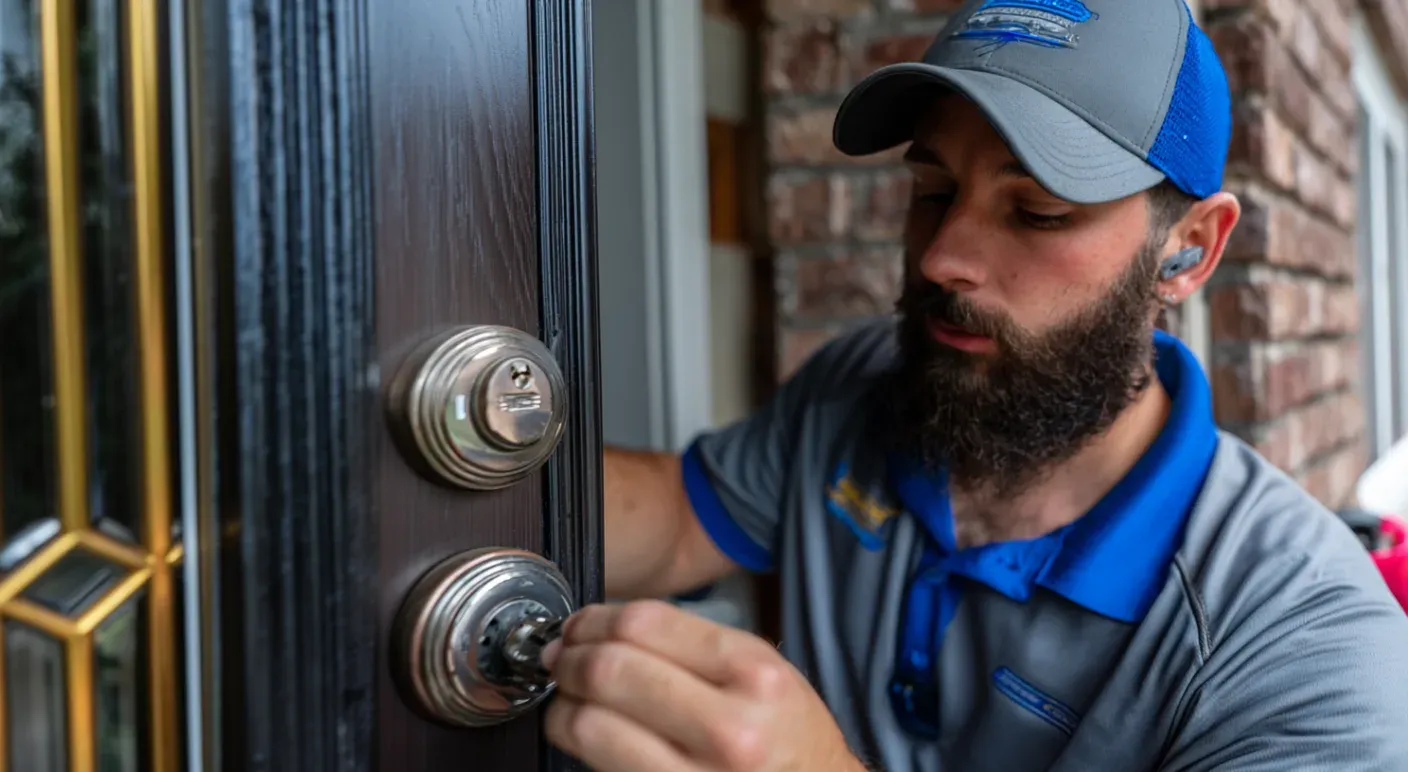
When hardware genuinely needs replacing, the install matters more than the box it came in.
A deadbolt is only as strong as what holds it. The factory screws that ship with most residential locks are three-quarters of an inch long — long enough to bite the decorative jamb trim and nothing else. A single hard shoulder splits that trim and the whole assembly comes through, expensive lock included.
Every deadbolt we fit gets 3-inch screws driven into the framing stud behind the jamb, and a reinforced strike plate where the frame will take one. That upgrade costs a few dollars in parts and is the difference between a door that resists a kick and one that does not.
Smart locks, fitted so they last
Keypad and Wi-Fi deadbolts are genuinely good products, and they are also the hardware we are most often called to fix — because they are the hardware most often self-installed.
A motorised bolt has none of the tolerance a human wrist does. If the door needs a shove to close, if the bore is out of round, if the strike is a couple of millimeters high, a person will never notice and the motor will fight it every single cycle until the gearbox strips. We prep the door properly, align the strike, and cycle the lock a dozen times before we call it done.
Locks are half of it
If a door genuinely worries you, hardware is not usually the weak point — the frame is. Reinforcing the strike area, adding long hinge screws, and fitting a jamb plate typically costs less than a premium deadbolt and does more for the door’s actual resistance. We will tell you when that is the better place for your money.