
New houses, new problems
Priceville has grown quickly off the I-65 corridor, and it gives us something unusual in our coverage area: an almost entirely modern housing stock.
That sounds like it should mean less locksmith work. It does not — it means different locksmith work. New houses do not have worn keys, seized cylinders or mortise locks that need servicing. They have three other problems instead, and all three are cheap to fix and almost never get fixed.
Problem one: the key history nobody thinks about
New homeowners are frequently surprised when we recommend a rekey. Surely a brand-new house has no key history?
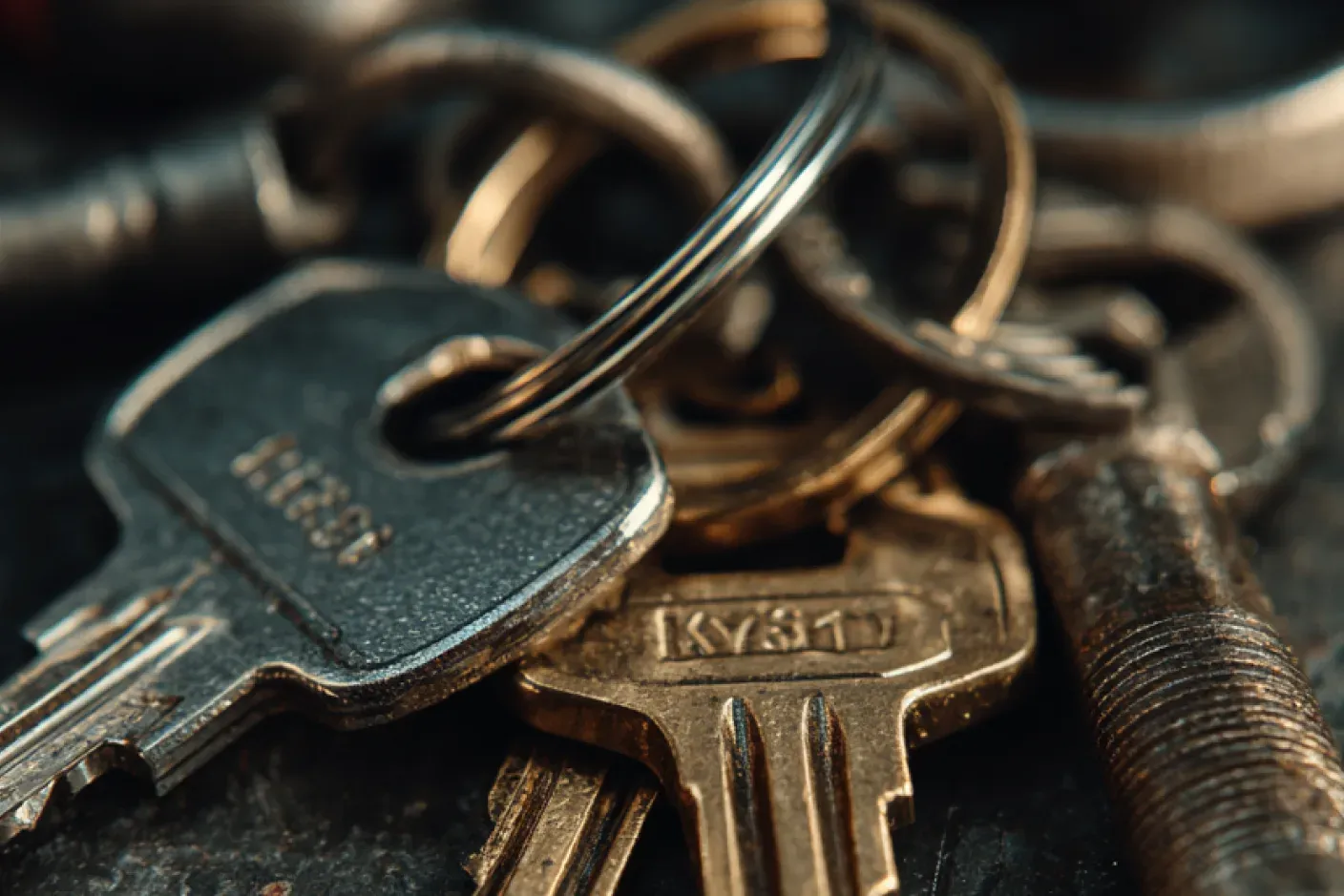
It has more than you would expect. Through the construction period the house runs a builder’s key, almost always a lockbox, and a rotating cast of subcontractors — framers, HVAC, electricians, flooring crews, painters, and the cleaning team before handover. That is a lot of hands on a lot of keys over several months.
Some builders use a proper construction keying system, where your first turn of the key permanently voids every construction key. It is a genuinely good system. But not every builder uses one, and there is no way to tell by looking at the lock.
Rekeying takes under an hour for a whole house and removes the question entirely.
Problem two: the screws
This is the one we care about most, because it is nearly universal in new construction and the fix costs almost nothing.
The deadbolt your builder fitted is probably fine hardware. What holds it is not. A factory strike plate ships with three-quarter-inch screws, and those screws bite the decorative jamb trim — a thin strip of pine nailed to the frame — and nothing structural at all.
The consequence is exactly what we see after break-ins: the lock held perfectly, and the trim split. The bolt was still fully extended when the whole assembly came through the doorway.
The fix:
- Three-inch screws through the strike plate into the framing stud behind the jamb.
- A reinforced strike plate to spread the load.
- Three-inch screws in the hinges too — hinges fail the same way and nobody ever checks them.
A few dollars in parts and twenty minutes of work. It is the highest security-per-dollar upgrade available on a new house, by a wide margin, and it beats any deadbolt you could buy to replace what is already there.
Problem three: smart locks fitted in a hurry
New builds attract new technology, and keypad and Wi-Fi deadbolts go on doors here in volume — a lot of them self-installed on a Saturday afternoon.
They are good products and we install plenty. The failure mode is always the same: a motorised bolt has none of the tolerance a human wrist does. If the door needs a slight push to close, or the bore is a fraction out of round, or the strike sits two millimeters high, a person will never notice and will simply nudge the door. The motor cannot. It fights that misalignment on every single cycle until the gearbox strips.
When we install one we prep the bore, square the strike, and cycle the lock repeatedly before we call it finished. When we are called to a failing one, correcting the alignment usually saves the lock.
Commercial along the interstate
The retail and service units going in around the I-65 exits are the other half of Priceville work — new commercial fit-outs that need a master key system designed properly from the start rather than retrofitted after somebody discovers that a key opens a door it should not.
Designing the hierarchy on paper before pinning anything is the whole job. Done afterwards it is far more expensive and rarely as clean.